
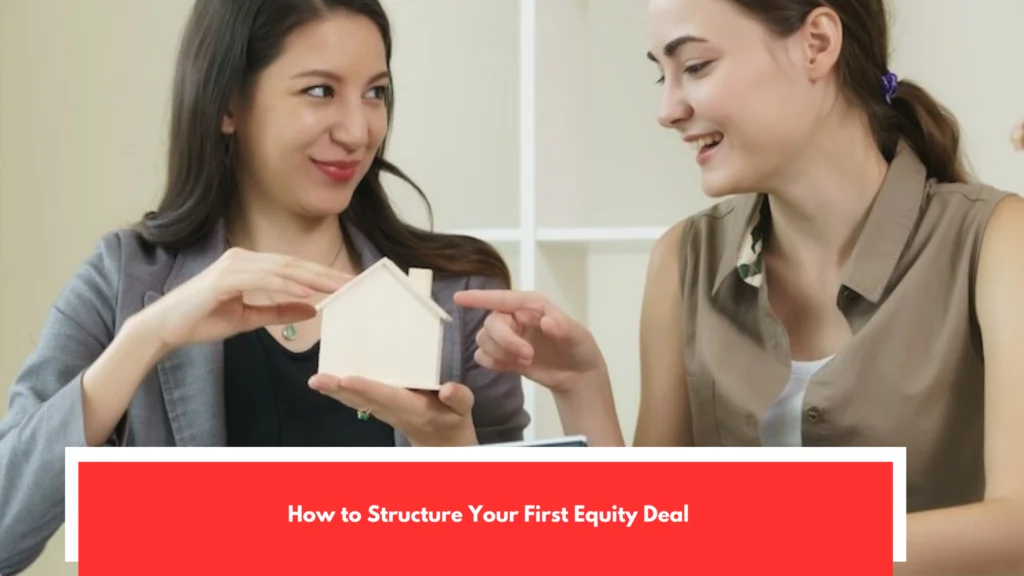

A good capital structure is also crucial to a growing company as it will help it maintain the momentum and maximize the opportunities to expand. Optimization of the capital structure is a process of identifying the perfect mix of debt and equity in funding your activities in a given proportion that will expose you to the right amount of risk as well as ensuring that the cost of capital can be effectively met. In this guide, we will discuss methods to improve the capital structure of a growing company, including how to structure your first equity deal.
With these milestones met, the startup will be in a position to raise a series A in which the primary goal is to grow the business and speed it up. It is often far beyond the means of founders of a new company to finance it to the needed level, when it comes to obtaining both, Product-Market Fit and scalability. Hence, the majority of startups require an external investment – in some business models, bootstrapping or self-financing.
What is private equity?

Can be an option depending on the industry. And in case you want to know more about bootstrapping and how to bootstrap a startup and grow it to millions in sales and earnings, then you will love the interview with Christian Pati, co-founder of Coderhouse on the Startupeable Podcast. Venture Capital (VC) companies find, examine and decide whether they should invest in a startup. They act on the behalf of their investors or Limited Partners, who supply fund to a limited fund running by an organization. To get some detailed information on how a VC works, we have a booklet to The Ultimate Guide to Venture Capital.
Every company also has an investment thesis. Other funds invest at other stages and not necessarily the seed one as some funds do specialize in certain sectors or even a certain type of business. You can also understand which funds you would find in the seed stage in our Venture Capital Directory. In case you know a partner or the director of a venture capital company, this is your best point of entry. Due to this reason, pitch your startup to them as much as you can. In case of interest, the analysts and associates will assist you to conduct probing the due diligence activities fast.
How does private equity work?

A person who invests his own money in startups is an angel investor. To know more about such a kind of investor, refer to our article What is an angel investor and how to convince them to invest in your startup The same way you have to ensure that you know when to raise capital, the investors should be certain that you are ready to be funded. Some of the things they check include the problem, the market, the traction, etc. To know more of what VC funds review, you can read our post 18 Criteria by Which Venture Capital.
Funds Look at Your Startup. The traction evaluation at the seed level, on the contrary, depends on the stage that a startup faces at the moment. This means the investor does not perform the same evaluation on a pre-traction start up as he does with a post-traction. Most likely you will think that you need to find a lead investor into your round first. Although having a lead investor can facilitate the process of other negotiations as well, this is not the most likely scenario during a seed round.
The private equity investment cycle

It will also be related to the size of your round, and where it is not large (USD $1 million or less) then you, as an entrepreneur, may not need a lead. Moreover, it is up to you to determine how many investors you will adhere to during the round. Broadly speaking there will be a few angels. This motion will subsequently guide you to carry on with the conversations to have the larger tickets. In case you have a list of the kind of investor profiles that might feature in your cap table, you will know who to call. The list will also assist you in giving priorities based on consultation with experts of the industry.
Past founders based on the slots you have available. Whenever you chat, you can refer to the spots to find and the kind of profile that you require. The following chart shows 3 different scenarios that you can observe. Keep in mind that those represent only examples and should not be ideal. The structure of your round can be other than that. Conversely, minimum ticket will depend on the size of round, and you will be required to evaluate it per investor. You, depending on the profile of the investor, can minimize the amount of the ticket. Let us say that the ticket-minimum of an investor.
Conclusion

Is USD $10,000 to USD $20,000, an experienced entrepreneur/ executive may request you to invest only USD $5,000 and in case you are convinced that his/her experience is a very valuable asset to your company you can go out of the way and agree on a smaller ticket. It is important to remember that even a single investor that you manage to attract does not matter how much they invest is going to validate your idea. One of your investors could be a former entrepreneur who was successful, or an executive of some start up or tech company, or even a famed VC investor.
Who may not be able to invest in the fund because they do not fit the investment thesis, but who may still invest as an angel investor). They will give you the backing of the founding team, and the possibility, so it will be handy in this round, and in the next rounds. What will manifest itself in certain investors is the Fear of Missing Out or FOMO when you begin to close with initial investors of your round. There is a limited amount of space that you can accommodate a limited amount of investors and thus scarcity brings this to your advantage. After you get the initial ones, the so called followers who are more persuaded that they want to join the round may be seen.
