

Capital funding of a startup is obtaining finance to grow and develop a new business venture, transforming an innovative idea to the state of a viable firm. Most startups require initial funding that they might use to pay off the start-up costs like products development, conducting market researches, recruiting employees and expanding their business operations. The second point covers how to get start-up capital, including funding stages, types of funds, suitable financial schemes, and Storytelling Techniques That Win Early-Stage Funding.
Needs and its current level of growth. They are additionally accompanied by varied degrees of assets: At the first quarter of 2023, Crunchbase described that the average investment round of American upstarts were 3.6 million dollars, whereas their average Series A round was 18.7 million dollars.
What storytelling means for your pitch

In most cases, the founders utilise their own capital or sources of funds friends and Family members avail to kick start the business. The product development is followed by pre-seed funding Initial financing The initial formal phase of financing is so-called seed funding, which typically follows when a startup acquires some traction. Investors during this phase are angel investors, incubators and early stage venture capital funds.
Series A Funding At this point, startups have gained a reputation (an established user base, steady revenue or other important performance indicator). Venture capital firms represent the primary shareholders in Series A rounds, and the goal of these companies is to see an actual business model and the way forward to profitability. Venture capital firms typically give series B funding. A series C investment and further on Such funding rounds (Series C, D and others) are typically.
How to use storytelling as a startup founder

Larger because the company has demonstrated its worth. These rounds can be with the participation of the private equity and investment banks, and in rare occasions, the hedge and/or venture capital funds. The end of these funding rounds normally makes the company ready to have an initial public offering (IPO) or an acquisition. Every stage is an iteration of the process of the development of a startup, including the idea of the startup, its creation, and entering the market, and it requires various levels of capital and investors. The participation of investors, risks, and expectations also differ so much at these stages.
A startup kit requires varied needs at various stages and any fundraising effort has to consider maturity of a business. The following is a description of the various phases of start up development and the impact they have on the decision making process of raising funds Pre seed funding and seed funding These embryonic phases of the startups are usually characterized by the fact that these startups do not have the funds to have their ideas converted into physical form.
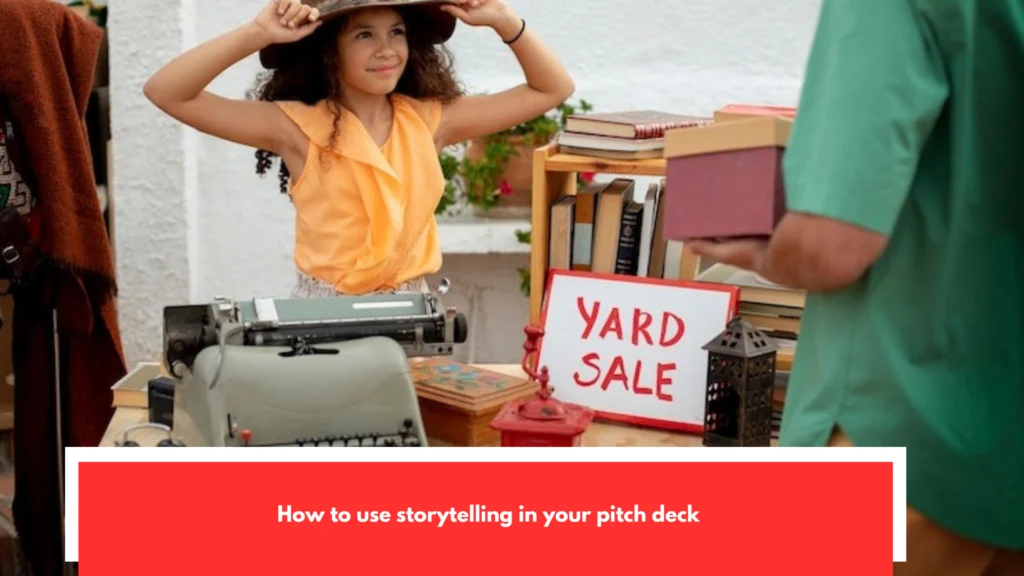
How to use storytelling in your pitch deck

The activities that are massively funded through fundraising include carrying out market research, developing a product, and developing a minimum viable product (MVP). The amount of capital received assists in promoting business concept and getting the startup ready to expand in future. Student investments in A round of funding When a startup has already created its MVP and accumulated additional traction (represented by either the amount of users, revenue, or other critical performance.
It will use Series A funding to grow its business. At this phase of fundraising, an entrepreneur concentrates on the improvement of the product or service, the increase of the customer base, and the promotion for establishing appropriate marketing strategies. With the series B investment, these companies can further enter into the market takeover, invest in human resources, buy more technology or infrastructure.
Conclusion

Maybe even tap into new markets or categories. The finances help the start up to conquer its current market or intend to cover new market, beating the other market participants. Those steps in terms of funding can be used to stabilize the market stand of the company and spread its influence further even on the global scale like penetrating the markets or product diversification.
Exit strategies Initial public offering (IPO) or buyout are long-term strategies that many startups hope to accomplish in the future, particularly the ones funded by venture capital. Fundraising at later stages can also strengthen the company valuation and become appealing to the investors or buyers who would prefer it in the public market. In addition to capital acquisition, fundraising can enable the startups to create credibility, develop a network with industry experts, and acquire insights and mentorship of seasoned investors. The sources of capital would be the most appropriate depending.
